The post How to Start a Business Legally in India first appeared on AmarParul Ventures (OPC) Pvt. Ltd.
]]>Whether you are launching a startup, opening a small business, starting an online company, or working as a freelancer, understanding the legal process is important for long-term success. Proper registration not only gives your business a legal identity but also helps build trust with customers, investors, and financial institutions.
If you are planning to start a business legally in India, this guide explains everything you need to know from choosing the right business structure to GST registration, licenses, compliance requirements, and professional support.
Businesses that want proper legal guidance often prefer working with experienced company registration services to avoid delays and compliance issues during the registration process.
Why Starting a Business Legally in India Is Important
Many small businesses begin informally, especially home businesses, freelancers, and local startups. However, operating without proper registration can create difficulties as the business grows.
A legally registered business offers several advantages:
- Builds trust among customers and vendors
- Helps open a business bank account
- Makes GST registration easier
- Improves loan and funding eligibility
- Protects the business from legal penalties
- Creates a professional business image
- Supports long-term business growth
Businesses with proper legal registration also find it easier to apply for government schemes, partnerships, and financial support.
Professional business advisory services can help entrepreneurs choose the right structure and avoid common legal mistakes during the early stages of business setup.
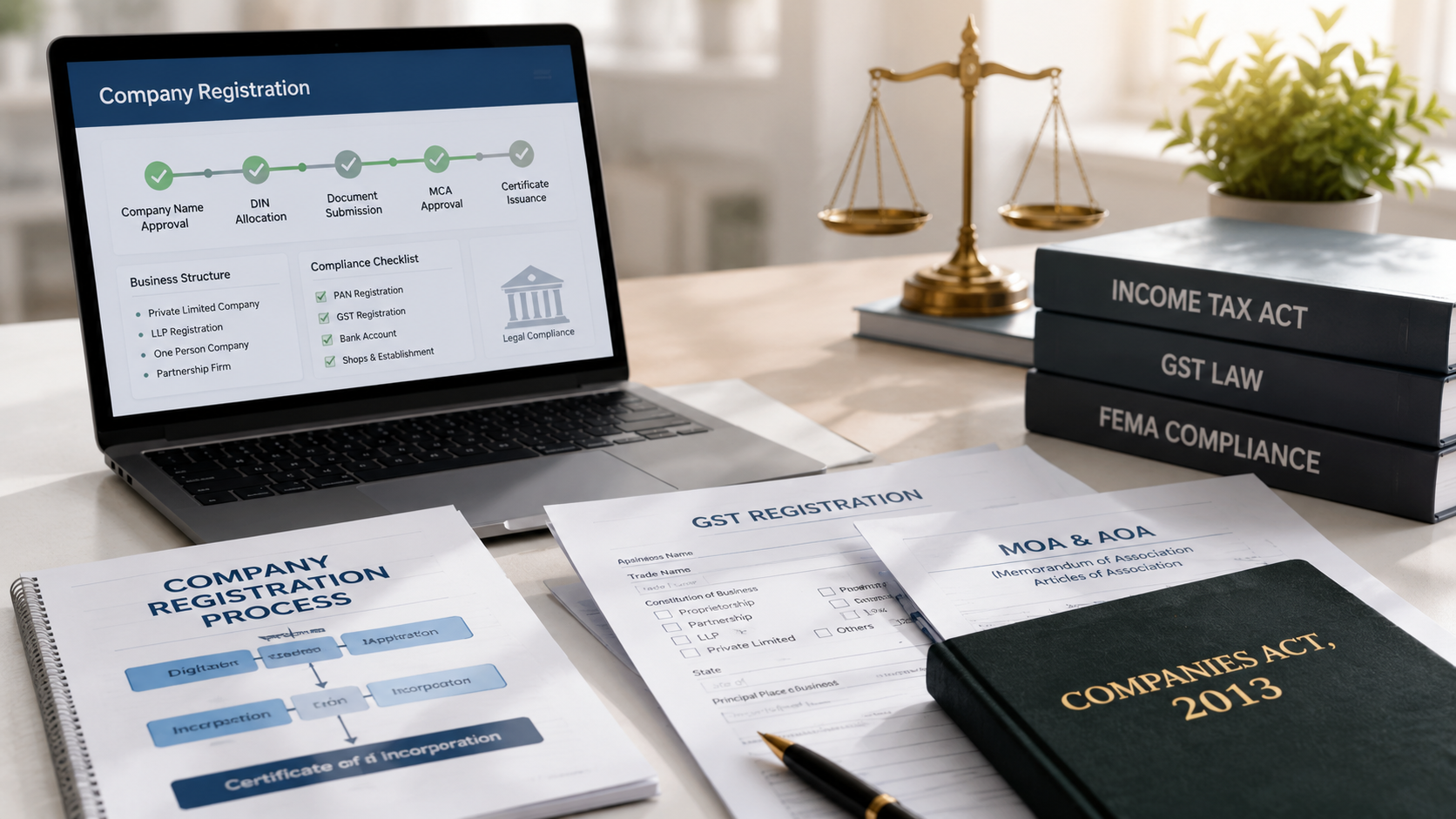
Step 1: Choose the Right Business Structure
One of the most important decisions while starting a business legally in India is selecting the right business structure. The structure affects taxation, compliance, ownership, liability, and future expansion opportunities.
Sole Proprietorship
A sole proprietorship is suitable for:
- Small businesses
- Freelancers
- Local shops
- Home businesses
It is one of the easiest and most affordable business structures in India. The owner and the business are treated as the same legal entity.
Benefits:-
- Easy to start
- Low compliance
- Simple taxation process
Limitations:-
- Unlimited personal liability
- Difficult to raise investment
- Limited scalability
Partnership Firm
A partnership firm is suitable when two or more people want to run a business together.
Benefits:-
- Shared responsibilities
- Easy setup process
- Flexible operations
Limitations:-
- Shared liabilities
- Possible partner disputes
- Limited legal protection
Limited Liability Partnership (LLP)
An LLP combines the flexibility of a partnership with liability protection.
Benefits:-
- Limited liability protection
- Separate legal identity
- Better business credibility
Best For:-
- Professional firms
- Consulting businesses
- Growing startups
Private Limited Company
A private limited company is one of the most preferred structures for startups and growing businesses.
Benefits:-
- Strong legal identity
- Investor-friendly structure
- Better funding opportunities
- Limited liability protection
Limitations:-
- Higher compliance requirements
- Regular ROC filings
- Structured legal process
Entrepreneurs planning future expansion often choose professional company incorporation services to ensure the registration process is completed correctly.
One Person Company (OPC)
An OPC is designed for solo entrepreneurs who want the benefits of a corporate structure without multiple shareholders.
Benefits:-
- Limited liability
- Separate legal identity
- Better professional image
Suitable For:-
- Solo founders
- Consultants
- Individual startups
Comparison of Business Structures in India
| Business Type | Liability | Compliance | Best For |
| Sole Proprietorship | Unlimited | Low | Small businesses |
| Partnership Firm | Shared | Moderate | Family or partner businesses |
| LLP | Limited | Moderate | Service businesses |
| Private Limited Company | Limited | Higher | Startups and growing businesses |
| OPC | Limited | Moderate | Solo entrepreneurs |
Step 2: Decide Your Business Name
Your business name plays an important role in branding and legal identity.
Before finalizing a name:
- Check MCA name availability
- Verify trademark conflicts
- Check domain availability
- Ensure the name matches your business activity
Choosing a unique and professional business name improves credibility and helps create a strong market presence.
Businesses planning long-term brand growth should also consider trademark protection during the early stages.
Step 3: Prepare the Required Documents
The documentation process is an important part of legal business registration in India.
Common documents required include:
- PAN card
- Aadhaar card
- Passport-size photographs
- Address proof
- Business address proof
- Utility bill
- NOC from property owner (if applicable)
For private limited companies and LLPs, additional documents may also be required.
Professional startup registration services can simplify the documentation and approval process significantly.
Step 4: Register Your Business Legally
Once the structure and documents are ready, the next step is completing the registration process.
The registration process usually includes:
- Digital Signature Certificate (DSC)
- Director Identification Number (DIN)
- Name approval
- Incorporation filing
- PAN and TAN generation
- Certificate of Incorporation
Today, most business registration processes in India can be completed online through the MCA portal.
However, errors in documentation or filing often delay approvals. This is why many startups prefer experienced legal business registration support to complete the process smoothly.

Step 5: Apply for GST Registration
GST registration is one of the most important legal requirements for businesses in India.
You may need GST registration if:
- Your turnover crosses the prescribed limit
- You sell products or services across states
- You run an online business
- You work with GST-registered companies
Benefits of GST Registration
- Legal tax compliance
- Input tax credit benefits
- Improved business credibility
- Easier B2B operations
Ignoring GST requirements can lead to penalties and compliance problems later.
Businesses often work with professional taxation advisory services to manage GST registration and filing properly.
Step 6: Obtain Necessary Licenses and Permits
Different businesses may require different licenses depending on the industry and operations.
Some common licenses include:
- MSME Registration
- Shop and Establishment License
- FSSAI License
- Professional Tax Registration
- Import Export Code (IEC)
- Trade License
For example:
- Food businesses require FSSAI approval
- Export businesses require IEC registration
- Retail stores may require local trade licenses
Understanding licensing requirements early helps avoid legal issues later.
Step 7: Open a Business Bank Account
A separate business bank account is important for maintaining financial transparency.
Using a personal account for business transactions can create accounting and taxation complications.
Benefits of a Business Account
- Better bookkeeping
- Easier tax filing
- Professional transactions
- Improved financial tracking
Most banks require:
- PAN card
- Business registration proof
- GST certificate (if applicable)
- Address proof
Step 8: Maintain Proper Accounting and Compliance
Many businesses focus only on registration and ignore compliance after setup. This creates serious issues later.
Legal business compliance includes:
- GST filing
- Income tax filing
- ROC filing
- TDS compliance
- Accounting records
- Annual returns
Proper accounting helps businesses:
- Track financial performance
- Avoid penalties
- Improve tax planning
- Maintain legal compliance
Growing businesses usually prefer professional accounting and compliance services to manage regular filings and financial records efficiently.
Common Legal Mistakes New Businesses Make
Many startups face legal and financial problems because of avoidable mistakes.
Some common mistakes include:
Choosing the Wrong Business Structure
Selecting the wrong structure can increase taxation and compliance burdens later.
Delaying GST Registration
Late GST registration may result in penalties and loss of input tax benefits.
Ignoring Compliance Deadlines
Missing filing deadlines can create unnecessary legal notices and penalties.
Mixing Personal and Business Finances
This creates accounting confusion and affects business transparency.
Ignoring Trademark Protection
Without trademark registration, businesses may face future branding disputes.
Professional startup compliance services can help businesses avoid these issues from the beginning.
How Much Does It Cost to Start a Business Legally in India?
The cost depends on the business structure and registration requirements.
Approximate Costs
| Registration Type | Estimated Cost |
| Sole Proprietorship | Low |
| Partnership Firm | Moderate |
| LLP Registration | Moderate |
| Private Limited Company | Higher |
| GST Registration | Usually affordable |
Additional costs may include:
- Professional fees
- License fees
- Compliance costs
- Trademark registration
- Accounting expenses
Businesses planning funding or loan applications may also require proper financial documents and project report preparation services for better financial planning.
How Long Does Business Registration Take in India?
The timeline depends on the business structure and document readiness.
Estimated Timelines
| Process | Estimated Time |
| Sole Proprietorship | Few days |
| Partnership Firm | 5–10 days |
| LLP Registration | 10–15 days |
| Private Limited Company | 10–20 days |
| GST Registration | 7–10 days |
Proper documentation and professional support can help speed up the approval process.
Why Professional CA Guidance Matters for New Businesses
Starting a business legally involves more than registration alone. Entrepreneurs must also understand taxation, compliance, documentation, accounting, and financial planning.
Professional support helps businesses:
- Avoid legal mistakes
- Choose the right structure
- Complete registrations correctly
- Maintain compliance
- Improve tax planning
- Build long-term financial stability
Experienced CA services for businesses can simplify the entire process and help startups focus more on growth instead of paperwork.
Businesses looking for professional assistance can also contact our CA experts for registration, taxation, and compliance support.
Final Thoughts
Starting a business legally in India is one of the smartest decisions for long-term growth and stability. A properly registered business creates trust, improves financial opportunities, and protects entrepreneurs from future legal problems.
From choosing the right business structure to GST registration, accounting, compliance, and taxation, every step plays an important role in building a strong business foundation.
Whether you are launching a startup, opening a small business, or expanding your operations, working with experienced professionals can make the entire process smoother and more efficient.
Reliable business registration and compliance solutions can help businesses stay legally secure while focusing on growth and success.
Frequently Asked Questions
Can I start a business without registration in India?
Yes, some small businesses start informally, but legal registration is recommended for taxation, banking, compliance, and long-term growth.
Which business structure is best for startups?
Private Limited Company and LLP structures are commonly preferred for startups because they offer better legal protection and scalability.
Is GST mandatory for every business?
No. GST registration depends on turnover limits and business activity. However, many businesses voluntarily register for operational benefits.
Can I register a company online in India?
Yes. Most business registrations in India can now be completed online through the MCA portal.
What licenses are required for small businesses?
The requirement depends on the industry. Common licenses include MSME registration, Shop and Establishment License, GST registration, and FSSAI approval.
Why is accounting important for new businesses?
Proper accounting helps businesses manage taxes, maintain compliance, track profits, and avoid financial problems in the future.
The post How to Start a Business Legally in India first appeared on AmarParul Ventures (OPC) Pvt. Ltd.
]]>